Monday, 26 January 2015

NDM 45

http://www.theguardian.com/technology/2015/jan/16/buzzfeed-public-chat-messaging-app-viber
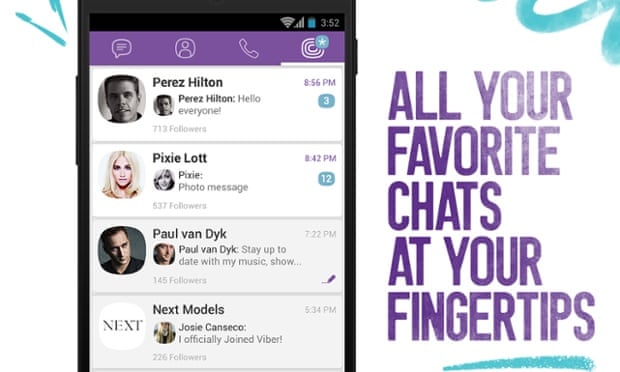
BuzzFeed launches its own 'public chat' channel in messaging app Viber
Viber's BuzzFeed deal sits alongside its growing emphasis on celebrities.
  • Online news site BuzzFeed’s initial growth may have been fuelled by social networks Facebook and Twitter
  • BuzzFeed has launched a “public chat” channel within the app
  • WeChat and Viber may soon be joined by another high-profile messaging app as a partner for BuzzFeed.
Online news site BuzzFeed’s initial growth may have been fuelled by social networks Facebook and Twitter, but its next frontier is likely to be messaging apps like its latest partner, Viber. BuzzFeed has launched a “public chat” channel within the app, which is owned by Japanese internet giant Rakuten, and which has more than 209 million monthly active users. WeChat and Viber may soon be joined by another high-profile messaging app as a partner for BuzzFeed. In November, it was named as one of the media companies in talks with photo and video messaging app Snapchat about serving stories to a new section of its app called Discover.
NDM 43

http://www.theguardian.com/technology/2015/jan/15/mark-zuckerberg-facebook-charlie-hebdo
Mark Zuckerberg defends Facebook censorship despite Charlie Hebdo support

  • Paris attack was to support freedom of expression but sees ‘tricky calculus’ in countries where that’s restricted
  • It wasn’t just a terrorist attack about just trying to do some damage and make people afraid and hurt people. 
  • This was specifically about people’s freedom of expression and ability to say what they want,” said Zuckerberg.

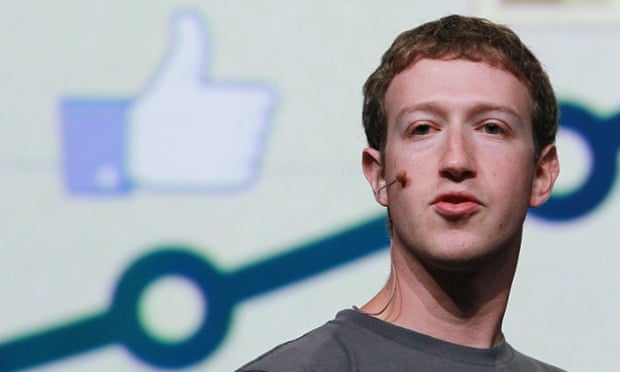
Facebook likes free speech, according to CEO Mark ZuckerbergIn this article it outlines that mark zuckerburg has recently commended the Charlie Hebdo attacks in Paris due to freedom of speech issues yet his won website actively censors content to its liking. The promise of new and digital media being an egalitarian and unbiased platform is being diminished by many large incumbent firms such as Facebook that were present at its dawn and are slowly but surely becoming big powers in influencing the content and opinion online as highlighted by the above article.

This article expresses clear marxism and porteo’s law in action as the firms move from the 80% to the 20% and start to impose and enforce what they believe is right and true and do not allow the people to create their own opinion as they recognise they have a large influence in constructing other opinions.

NDM 42

Does the Sun really speak to more people than Russell Brand?
  • The Sun sells 1.9m newspapers a day, according to the latest ABC figures from November.
  • This is considerably more than the 48,000 copies Brand’s latest book, Revolution, had sold up to 22 November, according to Nielsen.
  • He has 8.6 million Twitter followers
  • 1.2 million more Facebook followers.

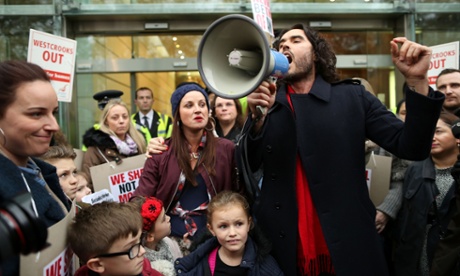
The Sun has stepped up its attacks on Russell Brand in recent days but in many ways the comedian is now much more influential than the paper. The Sun newspaper has run two front pages this week attacking comedian and political activist Russell Brand, but is it really controlling the public debate any more?
 
I think this paper’s reach on the majority of the world’s favourite social media sites. He has 8.6 million Twitter followers, which is 13 times more than the Sun. He also has 1.2 million more Facebook followers.

NDM 41

http://www.theguardian.com/technology/2014/oct/31/spain-newspaper-google-tax
Spain moves to protect domestic media with new 'Google tax'

  • Failure to pay up can lead to a fine of up to €600,000.
  • The “Google tax” isn’t the only component of Spain’s law
  • That requirement doesn’t require copyright holders to go through a judge before demanding links be removed

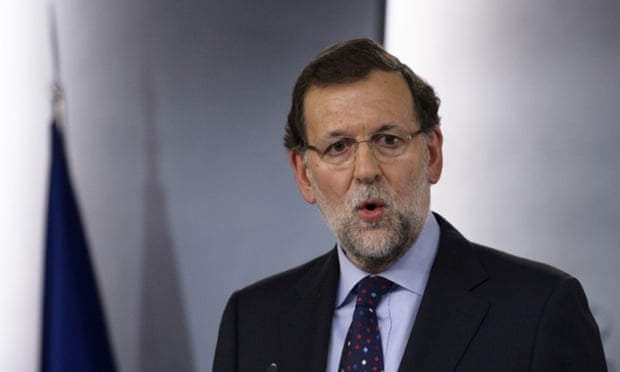
Spanish Prime Minister Mariano Rajoy speaks.Spain moves to protect domestic media with new 'Google tax':content aggregates such as Google News, in an effort to protect its print media industry." The "Google Tax" means that whenever an online service posts a link to a news article. That service is required to pay a fee to the organisation representing Spanish newspapers. Failure to pay could mean a fee of up to €600,000.

I think this is just another form of censorship. Because who would risk €600,000 to post a news article

NDM 40

http://www.theguardian.com/media/pda/2009/sep/18/oxford-social-media-convention-2009-journalism-blogs
How social networking is changing journalism

  • Impact of social media was overestimated in the short term and underestimated in long term
  • 8% of the Daily Telegraph web traffic comes from social media. 
  • social media has developed in the financial sphere

A conference in Oxford explores the interaction between the internet and the news industry. Richard Sambrook, the director of the BBC Global News Division, said that the "impact of social media was overestimated in the short term and underestimated in long term". He said mainstream media are adopting social media especially with blogging and twitter, but nobody discusses the effects on the long term. Sambrook thinks that organisations don't own the news any more. "There is a transformation for the journalist from being the gatekeeper of information to sharing it in a public space", he added that citizen journalism, therefore, is something that has to be taken in account.

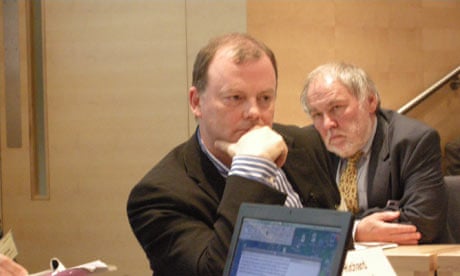
Oxford Social Media Convention Richard Sambrook BBCI agree with Sambrook with the short/long term. I think that platforms such as Twitter and blogging are being used more than ever and it's providing more and more opportunities for citizen journalism. It can be argued that this will be the cause for less journalism, but Sambrook was optimistic in the fact that "Journalism will stay". He thinks that journalism adds to what is essentially just information: "Journalism needs discipline, analysis, explanation and context, he pointed out, and therefore for him it is still a profession. The value that gets added with journalism is judgement, analysis and explanation - and that makes the difference."

NDM 39

http://uk.pcmag.com/opinion/39192/opinion/windows-10-ambitious-but-realistic
Windows 10: Ambitious But Realistic
  • The operating system is still in progress
  • Windows 10 will be a free upgrade for the first year for users of Windows 7, Windows 8
  • Microsoft would continue to provide updates "for the supported lifetime of the device,
As Microsoft unveiled the details of Windows 10 on Wednesday, I heard company executives explaining how it will work on a wide range of devices from desktops and laptops to tablets and phone, from an 84-inch conference room device called Surface Hub to an augmented reality headset called HoloLens. The sheer number of different kinds of devices that are meant to run this operating system and work with it seamlessly seems a huge undertaking.

I think the release of windows 10 is going to be very successful, current 95% of the PC industry is dominated by Microsoft 4% Macintosh and the rest other OS systems like Linux etc.. Having this big update in the fashion of holding a keynote to build the hype just like its predecessor Apple does

Friday, 23 January 2015

questions

1. How did the language and selection of images in the coverage create a particular representation of young people?
Negative representation of the youth and teenagers in particular due to the incorporated Mise-en-scene being a recall to that of action films and unlined reality which may have over exaggerated the riots to create an even more inaccurate representation of young people

2. Why does David Buckingham mention Owen Jones and his work Chavs: the demonisation of the working class? 
The survey discovered that 40% of articles that included/mentioned young people primarily focused on violence and not their positive achievements. Also, 71% of the overall articles presented them in a negative manner.

3. What is the typical representation of young people – and teenage boys in particular? What did the 2005 IPSOS/MORI survey find?
How can Stanley Cohen’s work on Moral Panic be linked to the coverage of the riots?The theory of moral panic can be applied as the coverage of the riots constructed an overall consensus of fear and panic for young people whist it was occurring which undoubtedly has stayed with many individuals.

4. What elements of the media and popular culture were blamed for the riots?
Majority of the media culture is to blame because of rap artists, violent video-games and reality T.V.

5. How was social media blamed for the riots? What was interesting about the discussion of social media when compared to the Arab Spring in 2011?
Majority of the media culture is to blame because of rap artists, violent video-games and reality T.V.

6. The riots generated a huge amount of comment and opinion - both in mainstream and social media. How can the two-step flow theory be linked to the coverage of the riots? 
Alternatively, how might media scholars like Henry Jenkins view the 'tsunami' of blogs, forums and social media comments? Do you agree that this shows the democratisation of the media?The two step-floe theory can be linked as 'twitter famous' individuals became opinion leaders on which many of their follower relied on their opinion to help construct their own.

7. What were the right-wing responses to the causes of the riots?
The two step-flow theory can be linked as celebrities became opinion leaders on which many of their follower relied on their opinion to create their views.

8.What were the left-wing responses to the causes of the riots?
The Left wing blamed society and its social class and inequality factors

9. What are your OWN views on the main causes of the riots?
The right wing response was negative as they were compared to beasts and dogs that could not be controlled and needed to be put on 'leashes'.

10. How can capitalism be blamed for the riots? What media theory (from our new/digital media unit) can this be linked to?

11. Were people involved in the riots given a voice in the media to explain their participation?
I believe the riots took place due to bias representation of the youth in the media and the cut of funds that kept teenagers busy in long uneventful periods.

12. In the Guardian website's investigation into the causes of the riots, they did interview rioters themselves. Read this Guardian article from their Reading the Riots academic research project - what causes are outlined by those involved in the disturbances?

13. What is your own opinion on the riots? Do you have sympathy with those involved or do you believe strong prison sentences are the right approach to prevent such events happening in future?